The modern consumer moves much faster than traditional market research can track. By the time a standard survey is fielded, analyzed, and synthesized into a report, consumer sentiment has often already shifted. For modern brands, relying solely on historical data is like driving while looking exclusively in the rearview mirror.
To stay competitive, proactive brands are turning to ai market insights. By leveraging machine learning to analyze real-time data at unprecedented speeds, companies can finally move from reactive damage control to predictive strategy. At AMC Insights, our London-based team is helping brands transform vast oceans of unstructured, messy data into clear, actionable roadmaps.
Here is how artificial intelligence is fundamentally changing the way we understand consumer behavior.
The Core Use Case: Taming Unstructured Data with AI
Historically, one of the biggest bottlenecks in market research has been coding and analyzing unstructured data. This includes social media chatter, customer reviews, call center transcripts, and open-ended survey responses. It is rich, valuable information, but it requires hundreds of hours for human analysts to categorize.
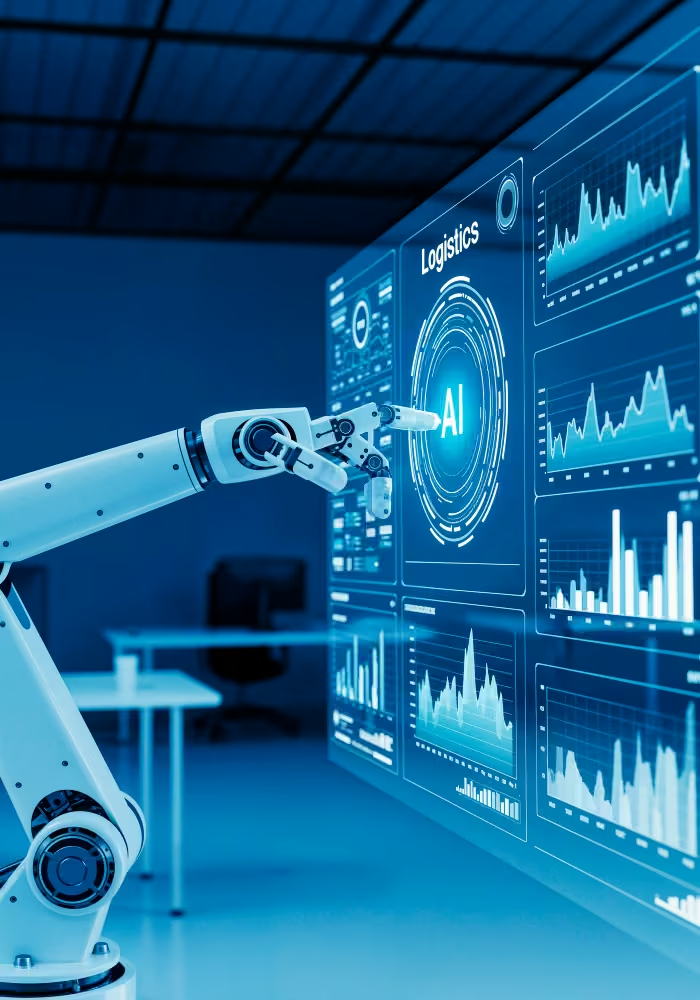
Today, AI-powered Natural Language Processing (NLP) models can read, categorize, and analyze millions of data points in minutes. Instead of relying on a small sample size of survey respondents, AI can ingest the entire digital footprint of a target demographic.
This technological leap generates incredibly deep ai marketing customer insights. It bypasses the inherent biases of small focus groups and extracts the true, unfiltered voice of the customer, allowing brands to understand not just what people are buying, but why they feel the way they do about it.
3 Ways Your Market Strategy Can Benefit From AI-Driven Market Insights
When you shift from manual data processing to automated, intelligent analysis, the benefits ripple across the entire marketing department.
- 1. Real-Time Sentiment Tracking: A product launch or a PR crisis doesn’t wait for your monthly reporting cycle. Utilizing market insights ai allows brands to monitor public perception in real-time. If a new ad campaign is confusing or offending consumers, AI algorithms can flag the negative sentiment immediately, allowing your team to pivot before the budget is fully spent.
- 2. Identifying Micro-Trends Before They Peak: Traditional research validates trends that are already happening. AI driven marketing insights, on the other hand, can spot emerging consumer needs and micro-trends before they hit the mainstream. By analyzing subtle shifts in search queries and social media language, AI helps brands innovate ahead of the curve.
- 3. Hyper-Personalization at Scale: Consumers now expect messaging tailored directly to their specific needs. By translating broad market data into targeted ai marketing insights, companies can inform hyper-personalized ad copy, segment audiences with granular precision, and develop products that feel custom-made for niche demographics.
Looking Ahead: The Future of AI in Market Research
AI in market research is rapidly evolving from a tool that merely analyzes existing data into a system that generates strategic recommendations.
When analyzing recent 2025 trends, innovations ai marketing strategy impact analysis insights, the overarching theme is clear: the industry is moving toward predictive modeling. Future models won’t just tell you how consumers reacted to your last campaign; they will simulate how different demographic segments are likely to react to your next campaign, acting as a virtual testing ground for brand strategy.
Why Human Expertise Still Matters in an AI World
With the sheer volume and speed of modern ai market insights, it is tempting to assume that the role of the human researcher is becoming obsolete. The reality, however, is that as data becomes more abundant and accessible, the ability to accurately interpret it becomes the true competitive advantage. AI is an exceptionally powerful engine for processing unstructured information, but it still requires an expert navigator to guide its application.
Raw data and algorithmic outputs often lack the cultural, geographical, and commercial context required for nuanced business decisions. For instance, an AI model might successfully identify a sudden spike in negative sentiment around a product launch in the UK, but it cannot inherently understand the complex, shifting cultural drivers, historical precedents, or localized humor behind that reaction. Algorithms excel at identifying the what and the when, but human analysts are absolutely essential for uncovering the why.
The most effective market research strategies do not pit humans against machines; they combine the two. By letting AI do the heavy lifting of reading, categorizing, and tracking millions of data points, human researchers are freed from tedious manual coding tasks. This allows them to focus entirely on high-level strategy, translating statistical anomalies into cohesive narratives, and filtering out algorithmic noise to deliver the critical “so what?” that business leaders actually need to make informed choices.
Conclusion
The transition from traditional, retrospective market research to predictive, AI-driven analysis represents a fundamental shift in how brands understand their audience. Relying on outdated surveys and historical data is no longer sufficient in a landscape where consumer preferences evolve overnight. By embracing ai marketing insights, companies can finally unlock the immense value hidden within vast oceans of unstructured data, turning fragmented social chatter, reviews, and transcripts into clear, actionable roadmaps.
Stop drowning in unstructured data and start acting on clear, predictive intelligence.
Contact our team at AMC Insights today to discover how tailored ai market insights can bridge the gap between your brand and your consumers, future-proofing your next big campaign.
If you’re interested in more free knowledge on market research, check out our informative market research blog.