Pricing a new product shouldn’t be a guessing game. Set the price too high, and nobody buys it. Set the price too low, and you leave money on the table. Finding that perfect “sweet spot” is the hardest part of launching anything new.
This is where the Gabor-Granger method comes in. Developed in the 1960s, the Gabor-Granger pricing approach removes the guesswork. Instead of relying on gut feeling, Gabor-Granger pricing uses a simple, repeatable survey method to ask potential customers directly what they are willing to pay. This builds a highly accurate demand curve, showing you exactly where you will make the most money.
What Is the Gabor-Granger Pricing Technique?
The Gabor-Granger pricing technique is a survey method that isolates one thing: price. It works by showing a customer a product and asking them if they would buy it at a specific price.
This is known as a sequential monadic framework, which is the foundation of the Gabor-Granger model. Rather than asking an open question like, “How much would you pay?”, the survey gives them a set price and asks for a simple answer. For example: “Would you buy this at £50?”
Unlike standard cost-plus pricing, which just looks at how much a product costs to make and adds a profit margin, the Gabor-Granger pricing model is entirely consumer-driven. It focuses on what the market will actually tolerate. It works best when you already have a clear product description and a rough idea of what the price should be, but need to narrow it down to the exact figure.

How to Design and Execute a Gabor-Granger Test
Setting up a Gabor-Granger test is straightforward, provided you structure your survey correctly.
Structuring Your Price Ladder
First, you need to set your prices. You create a “price ladder” of usually 5 to 7 price points. This ladder should sit around what you expect the market price to be.
Next, you need to decide how the survey will move through these prices. If a customer says “yes” to a price, the survey branches and asks if they would buy it at a higher price. If they say “no,” it drops down to a lower price. This is where tools like Gabor-Granger Qualtrics are vital, as they can automate this logic. You can start high and drop down, start low and go up, or start at a random price to stop people from guessing your strategy.
Writing Standardized Questions
The phrasing of your test questions must be exact. You should always ask: “At [Price X], how likely would you be to purchase [Product Name]?”
Instead of a simple Yes/No, it is better to use a 5-point scale (e.g., from “Definitely would buy” to “Definitely would not buy”). These Gabor-Granger pricing questions give you more detail on how strongly the customer feels.
Interpreting Gabor-Granger Output and Pricing Analysis
Once the survey is complete, you need to make sense of the Gabor-Granger output. This raw data tells you the maximum price each person is willing to pay.
Building the Demand and Revenue Curves
The main part of Gabor-Granger analysis is plotting two visual curves:
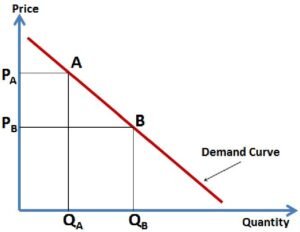
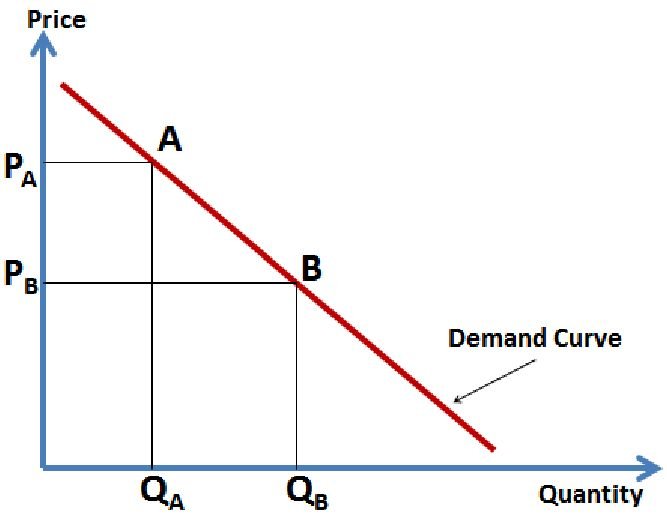
- The Demand Curve: This plots the price against the percentage of people willing to buy. Naturally, as the price goes up, the number of buyers goes down.
- The Revenue Curve: This is the most important part. It multiplies the price point by the percentage of buyers. This curve will look like a hill, and the highest point of that hill is your maximum revenue point.
Analysing Price Elasticity
Good Gabor-Granger pricing analysis helps you spot “price cliffs”—the exact point where a small price increase causes a massive drop in sales. This is called price elasticity. If dropping your price by £5 doubles your sales, your product is highly elastic. If doubling your price barely changes sales, it is inelastic.
Gabor-Granger vs. Van Westendorp: Which Pricing Method Should You Choose?
When deciding how to price a product, the debate often comes down to Gabor-Granger vs. Van Westendorp.
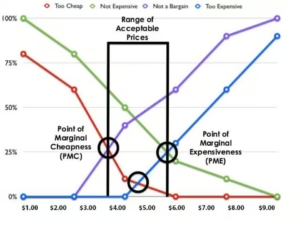
While the Gabor-Granger method tests specific prices you have chosen, the Van Westendorp Price Sensitivity Meter is open-ended. It asks four questions to find out when a customer thinks a product is too cheap (and therefore bad quality), cheap, expensive, or too expensive to consider.
Here is a quick look at Van Westendorp vs. Gabor-Granger:
| Feature | Gabor-Granger Method | Van Westendorp (PSM) |
| Main Goal | Find the price that makes the most money | Find the acceptable price range for a product |
| Question Type | Direct question on specific prices | Open questions on how cheap or expensive it feels |
| What You Need | A set list of prices ready to test | No starting prices needed |
| Best Used For | Upgrades, new versions of old products | Completely new, unique products |
Limitations of the Gabor-Granger Model
While the Gabor-Granger pricing technique is brilliant for finding revenue points, it isn’t perfect. The biggest flaw of the Gabor-Granger model is that it doesn’t look at competitors. It assumes your product exists in a vacuum.
It also suffers from “hypothetical bias.” People are much more willing to spend imaginary money on a survey than real money in a shop. Finally, if your pricing depends on different features or bundle packages, you shouldn’t use Gabor-Granger; you should use Conjoint Analysis instead.
Best Practices for Implementing Gabor-Granger Pricing
To get the most out of your Gabor-Granger pricing research, keep these final tips in mind:
- Only ask real buyers: Only survey people who actually buy in your category. If you ask people who would never buy your product anyway, your data will be useless.
- Mix up the start price: Always randomise the starting price on your ladder so people don’t get anchored to one number.
- Adjust for reality: Remember that people overstate what they will buy. A good rule is to count “Definitely would buy” as a 70% chance of a real sale, and “Probably would buy” as a 30% chance.
Ready to stop guessing and start growing?
Finding the right price shouldn’t be left to chance. At AMC Insights, our expert team can help you design, run, and analyse your pricing research to ensure you launch with absolute confidence. Contact AMC Insights today to find your perfect price point.