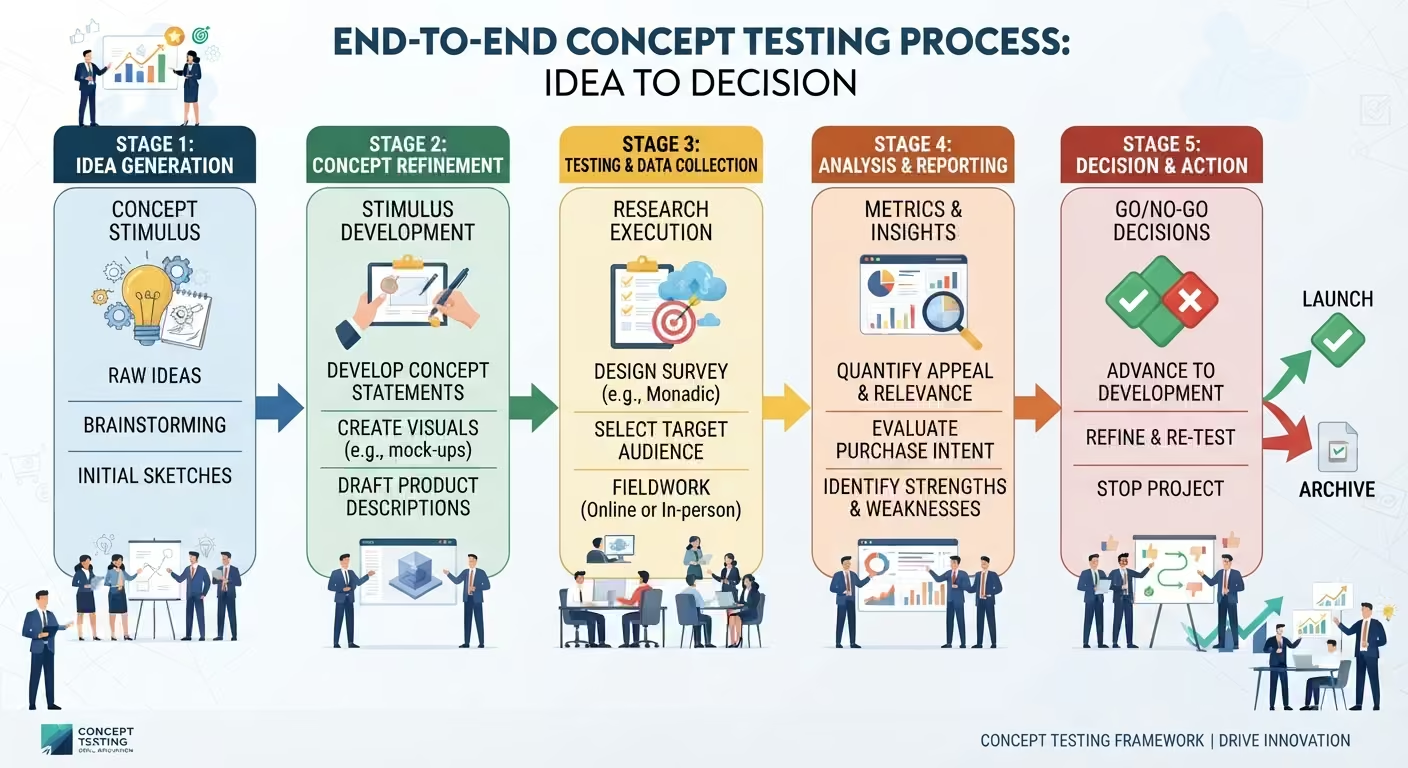
Product concept testing is the structured evaluation of a new product idea with target customers before significant development or launch investment. It shows whether people understand the idea, see it as relevant, and are willing to consider or buy it. UK product and innovation teams use it to screen multiple ideas or refine a single proposition, reducing the risk of advancing concepts that lack clear appeal.
The process answers a specific business question: should this idea move forward, be refined, or be stopped? It does not replace later prototype or in-market testing, but it provides early evidence on comprehension, relevance and purchase intent.
What Product Concept Testing Measures
A well-designed test measures several linked outcomes. Comprehension checks whether respondents can accurately describe the product and its main benefit. Relevance and appeal scores show how well the idea fits needs or occasions. Purchase intent or consideration indicates stated willingness to buy or try. Additional measures often include uniqueness versus existing options, believability and any barriers.
These metrics are directional. High stated appeal does not guarantee sales; low comprehension usually means the stimulus or positioning needs work before further investment. Results are most useful when action standards (for example, a minimum top-box appeal score or purchase-intent threshold) are set before fieldwork.
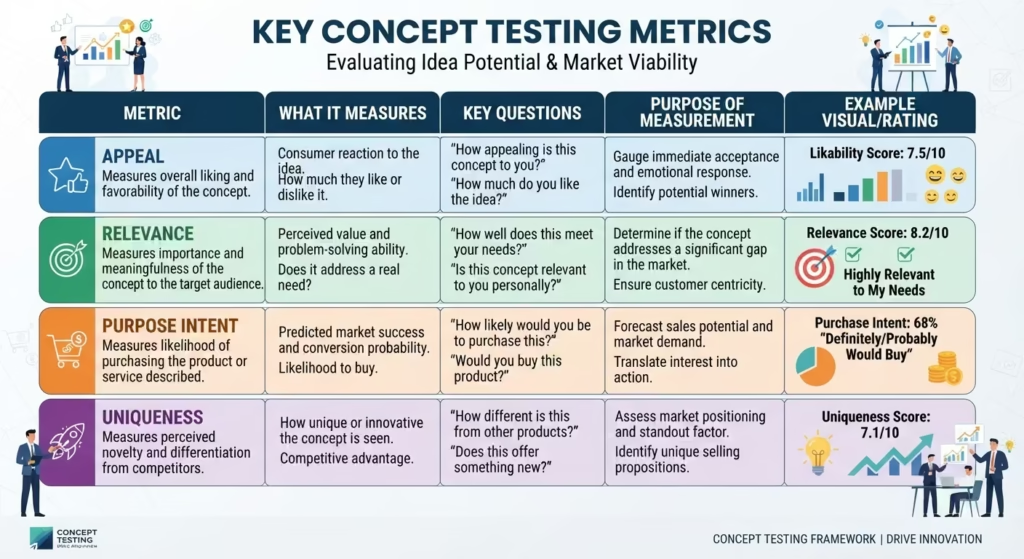
What Product Concept Testing Measures
A well-designed test measures several linked outcomes. Comprehension checks whether respondents can accurately describe the product and its main benefit. Relevance and appeal scores show how well the idea fits needs or occasions. Purchase intent or consideration indicates stated willingness to buy or try. Additional measures often include uniqueness versus existing options, believability and any barriers.
These metrics are directional. High stated appeal does not guarantee sales; low comprehension usually means the stimulus or positioning needs work before further investment. Results are most useful when action standards (for example, a minimum top-box appeal score or purchase-intent threshold) are set before fieldwork.
Common Concept Testing Methods
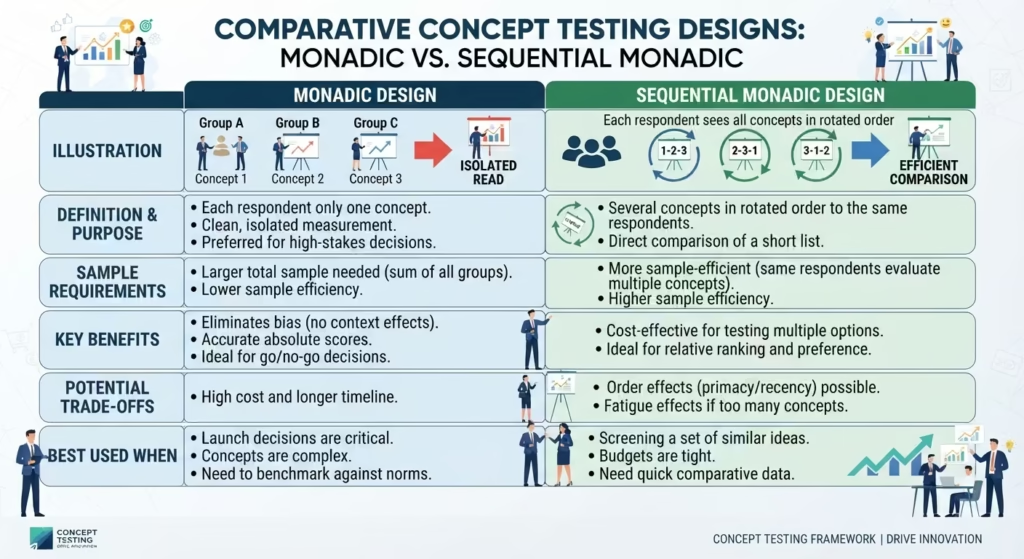
Three main designs are used. Monadic testing shows each respondent only one concept. This produces a clean, isolated read and is preferred for high-stakes go/no-go decisions, though it requires a larger total sample. Sequential monadic testing shows several concepts in rotated order to the same respondents. It is more sample-efficient for comparing a short list but can introduce order or fatigue effects. Comparative designs show concepts side-by-side for ranking; they are useful for rapid screening but less reliable for absolute judgements.
Qualitative methods (in-depth interviews or focus groups) often precede or accompany quantitative testing. They reveal why a concept scores as it does and help refine language. Quantitative surveys then provide comparable scores across concepts or segments. Hybrid designs are common: qualitative exploration first, then a quantitative test of refined stimuli.
How to Run a Product Concept Test
Start by defining the decision the research must support and the action standards that will be applied. Next, prepare consistent stimuli. A clear concept typically includes a short description of the need or problem, the product solution, key benefits, and (where relevant) price or pack cues. Stimuli should be realistic enough for evaluation but not so finished that they test design rather than the idea.
Recruit from the intended target audience. General panels can dilute results if the category is specialised. Screen for category usage or purchase intent where appropriate. Administer the test (online survey or mixed methods), analyse scores against the pre-set standards, and examine open-ended responses for themes. Report findings as evidence for the decision, noting sample composition, method limitations and confidence levels.
Limitations and Common Mistakes
Concept testing relies on stated responses. It can overstate interest for novel ideas or understate barriers that appear only with real use or price. Order effects, unclear stimuli and non-representative samples are frequent problems. Testing too late, after heavy development spend, reduces the value of the findings. Results should be interpreted alongside other evidence (market sizing, competitive context, technical feasibility) rather than treated as a sole predictor of success.
Hypothetical example: a UK food brand tests three snack concepts monadically with category buyers. Concept A scores highest on appeal and purchase intent but shows comprehension issues in open ends. The team revises the benefit wording and re-tests before prototype investment. This is an illustration only, not an AMC project.
How Findings Inform Decisions
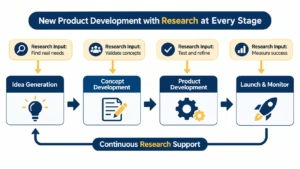
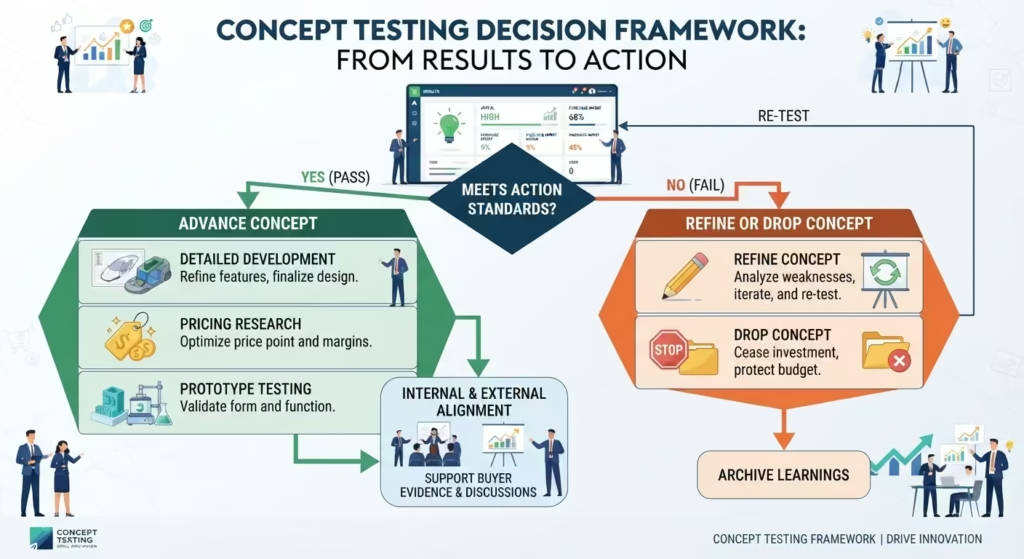
Clear results help teams prioritise the innovation pipeline. Concepts that meet action standards can move to detailed development, pricing research or prototype testing. Those that fall short can be refined or dropped, protecting budget. The same data often supports internal stakeholder alignment and, later, retailer or investor discussions by showing buyer evidence.
Innovations and product development services at AMC Insights include concept evaluation and related research to support these decisions. Broader market research services cover the primary methods used in concept testing.
Frequently Asked Questions
When should product concept testing be done?
Early in the innovation process, after initial idea generation but before significant design or manufacturing investment. It is also useful when refining a short list of concepts.
What sample size is typical?
Qualitative exploration often uses 8–15 participants per segment for directional insight. Quantitative monadic or sequential tests commonly aim for 100+ respondents per concept cell for more stable scores, though exact needs depend on precision required and segmentation. These are industry conventions, not fixed standards.
How does concept testing differ from product testing?
Concept testing evaluates the idea or proposition. Product testing evaluates a physical or working prototype (taste, usability, performance). Concept testing usually comes first.
Can results predict launch success?
They provide early evidence on appeal and intent. They do not guarantee sales. Later stages (pricing, prototype, in-market or simulated test market) are needed for stronger forecasts. Always review method, sample and stimulus quality.