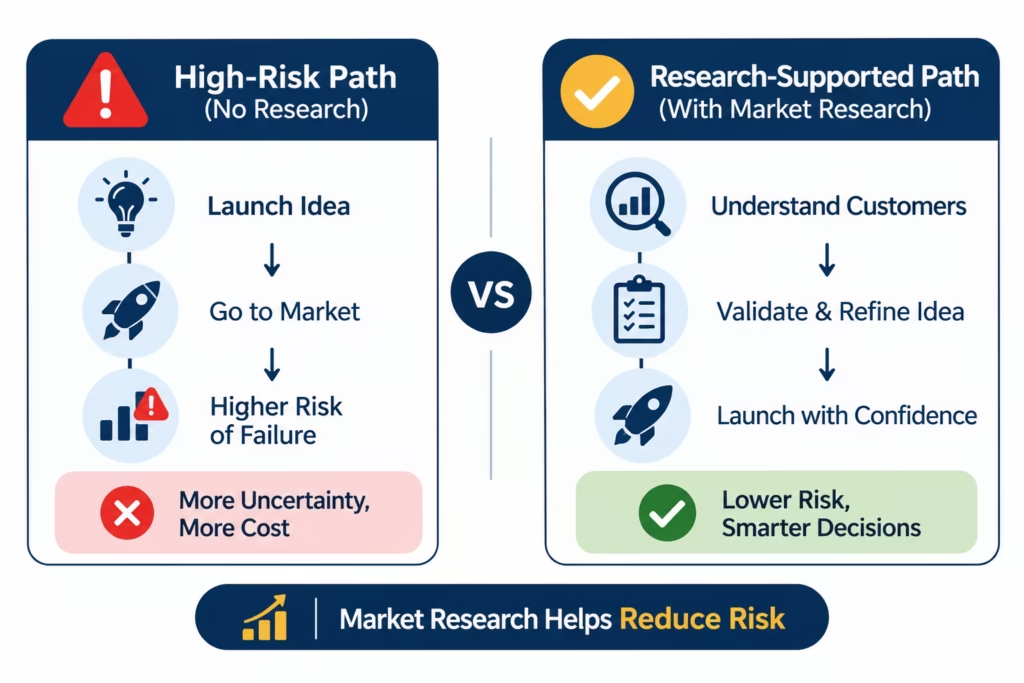
Innovation research is the systematic use of market research methods to reduce uncertainty at every stage of new product development. It helps UK teams decide which ideas to pursue, which concepts to refine, and whether a product is ready for launch. Without it, decisions rest on internal assumptions that often fail when they meet real customers.
Research does not replace judgement. It supplies evidence that makes go, kill or recycle decisions clearer and more defensible.
Why Innovation Research Matters in the UK
New product failure rates remain high across consumer and B2B categories. Common causes include weak problem-solution fit, unclear target audiences, and pricing that does not match willingness to pay. Innovation research addresses these risks early, when changes are still relatively cheap.
For UK businesses the cost of a failed launch includes not only development spend but also retailer listings, marketing investment and reputational damage. Structured research at key gates reduces the chance of advancing weak ideas and increases the chance of spotting stronger ones.
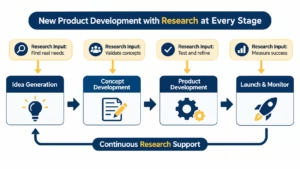
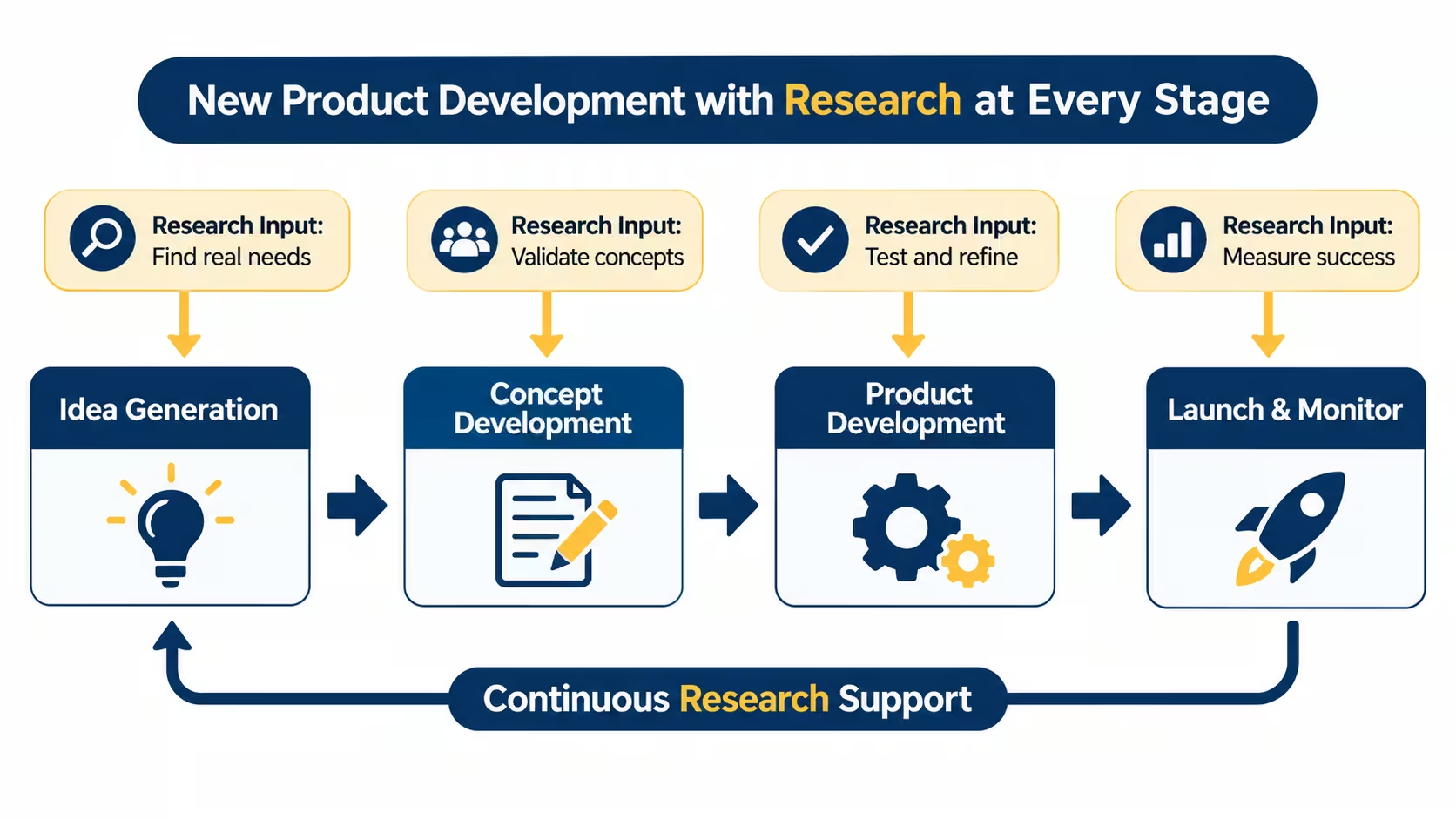
Where Research Fits in the New Product Development Process
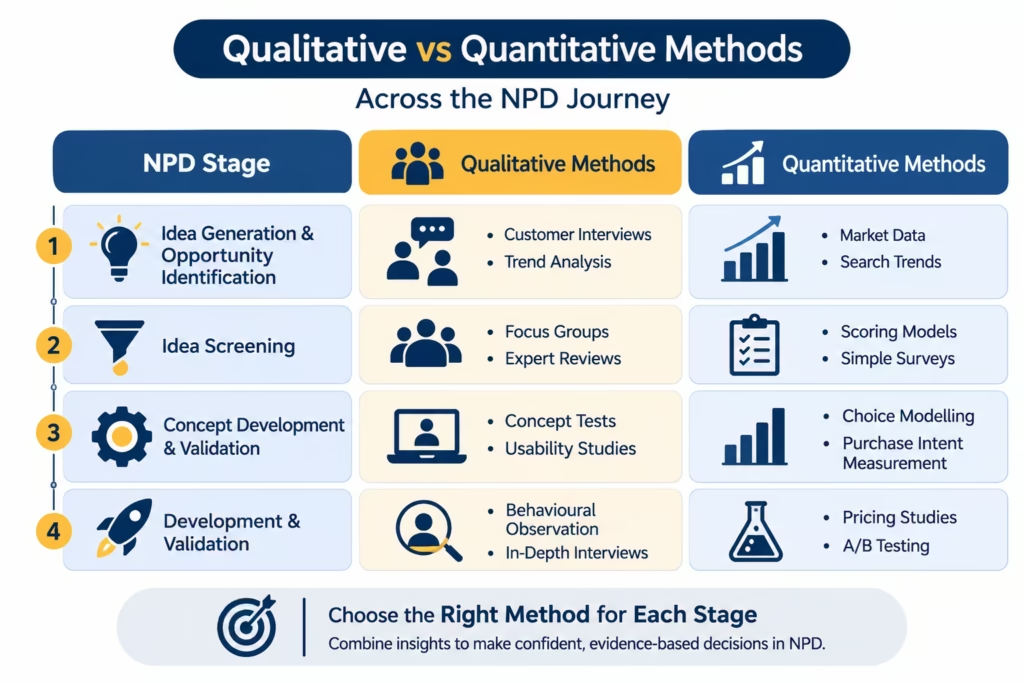
Most organisations use some form of staged process. Research supports each stage differently.
Idea generation and opportunity identification
Desk research, trend analysis, customer interviews and ethnographic observation surface unmet needs and white spaces. The goal is a longlist of opportunities grounded in evidence rather than internal brainstorming alone.
Idea screening
Qualitative methods (interviews, focus groups) and simple quantitative filters help rank ideas against commercial potential, strategic fit and feasibility. Weak ideas are removed before significant resources are committed.
Concept development and testing
Concepts are shown to target customers in qualitative and quantitative tests. Measures typically include comprehension, relevance, uniqueness, believability and purchase intent. See the related guide on product concept testing for detailed methods.
Development and validation
Prototype or beta testing, usability research, pricing studies and competitive positioning work refine the offer. Research at this stage often combines behavioural observation with stated preference data.
Launch readiness and post-launch learning
Final checks on messaging, packaging, channel fit and early in-market feedback allow course correction. Ongoing tracking measures whether the product delivers the intended experience and commercial results.
Common Research Methods Used
- Qualitative: in-depth interviews, focus groups, ethnography, co-creation workshops — best for understanding “why” and refining language and features.
- Quantitative: concept tests, conjoint or discrete choice modelling, pricing research (for example Gabor-Granger), usage and attitude surveys — best for sizing appeal and prioritising attributes.
- Secondary and competitive analysis: market sizing, category reviews and competitor benchmarking provide context and realistic constraints.
The strongest programmes combine methods rather than relying on a single technique.
Limitations and Common Mistakes
Research is only as good as its design and interpretation. Common problems include:
- Testing concepts with the wrong audience.
- Asking leading questions that inflate appeal.
- Treating a single concept score as a forecast of market share.
- Skipping research at later stages because early results looked positive.
- Ignoring operational constraints that research cannot overcome.
Findings should be treated as evidence that informs decisions, not as automatic green lights. Sample size, question design and competitive context all affect reliability.
How Findings Inform Business Decisions
Clear research outputs support specific choices: which idea to kill, which concept to develop further, which price point to test at scale, and which claims to use in launch communications. They also help align cross-functional teams around shared evidence rather than conflicting opinions.
Innovations and Product Development services at AMC Insights support organisations that need structured evaluation, screening and validation work. Related market research services can supply the primary data required at each stage.
Frequently Asked Questions
What is the difference between innovation research and product concept testing?
Innovation research covers the full new product development process from opportunity identification to post-launch learning. Product concept testing is one focused stage within that process.
When should a UK business start using market research for new products?
As early as possible. Research at the idea and screening stages prevents costly investment in weak concepts. Later-stage research then validates and refines the strongest options.
Can small teams run effective innovation research?
Yes. Focused qualitative work and lighter quantitative tests can provide useful evidence. The key is clear objectives, the right sample and honest interpretation of results rather than large budgets alone.
How does AMC Insights support new product development research?
Through Innovations and Product Development services that include evaluation, screening and validation research. Teams can contact AMC Insights to discuss specific requirements.