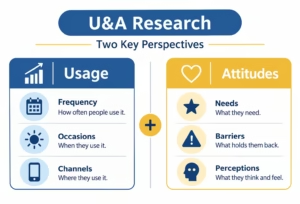
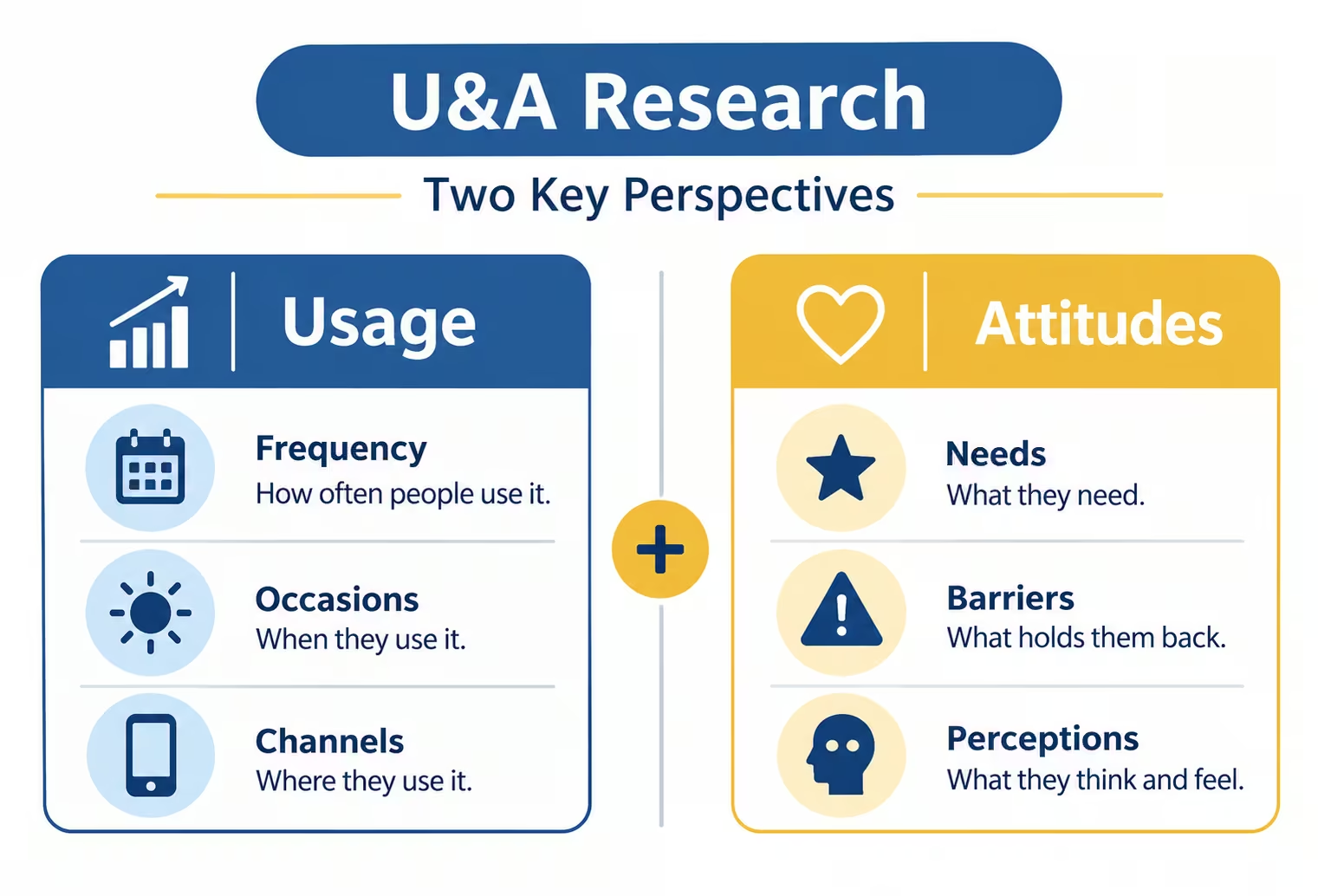
Usage and attitude research (also called a U&A study) measures how people use a product category and what they think and feel about it. It combines behavioural questions with attitude questions so UK teams can see both actions and opinions in one study.
What usage and attitude research measures
Usage and attitude research measures two things at once: what people do and what they think.
Usage covers:
- Who buys or uses the category
- How often and in what quantities
- On which occasions
- Through which channels
- Which brands or substitutes they use
Attitudes cover:
- Needs and expectations
- Choice criteria
- Satisfaction and barriers
- Overall feelings about the category or brands
Stated attitudes do not always match real behaviour. A U&A study captures both so the gap becomes visible.
When UK teams use it
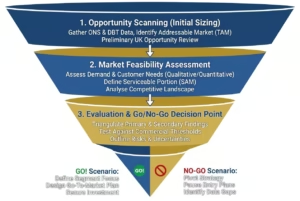
UK teams commission usage and attitude research when they need a clear baseline picture of a category before bigger decisions.
Typical triggers include:
- Entering or expanding in a category
- Checking whether old assumptions about users still hold
- Building a foundation for segmentation or product work
- Understanding occasions, barriers and unmet needs
It supports prioritisation of user groups, messaging and product development. It does not guarantee commercial results.
How to design a useful study
A useful U&A study starts with the business decision it must inform, not with a long questionnaire.
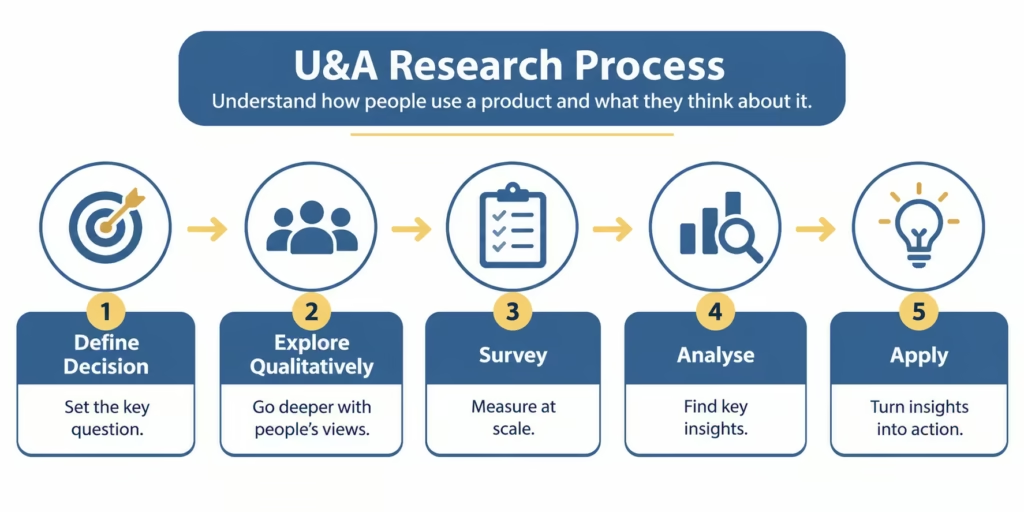
Follow these steps:
- Define the exact decision and the target audience.
- Run short qualitative interviews or groups to learn real language, occasions and substitutes.
- Design a sample large enough for the subgroups you need to compare.
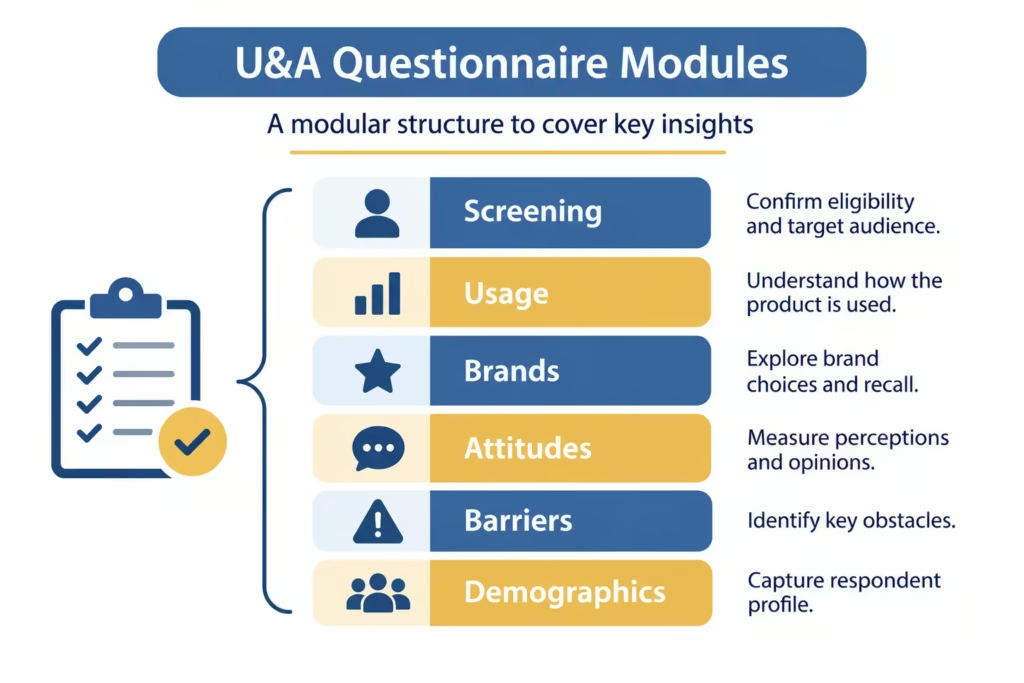
- Build a modular questionnaire: screening, usage, brand repertoire, attitudes, barriers, demographics.
- Use a realistic recall period (past week for frequent behaviour, past 12 months for infrequent).
- Pre-test the questionnaire for clarity and length.
- Document sampling, weighting and limitations clearly.
Common methods and limitations
Most U&A studies use a structured quantitative survey, usually online. Qualitative work often comes first to shape the questions.
Main strengths:
- Sizes behaviour and attitudes across a defined population
- Allows comparison of user groups and occasions
- Creates a reusable category baseline
Main limitations:
- Self-reported usage can be inaccurate (people forget or overstate)
- Sample size can become too small once split by subgroups
- Attitudes do not always predict future behaviour
In the UK, follow data-protection rules and the Market Research Society Code of Conduct. Always report method, sample and limitations so decision-makers can judge the evidence.
How findings support decisions
Findings typically show:
- Size of different user groups
- Occasions that drive volume
- Attributes that matter most
- Gaps between current usage and stated needs
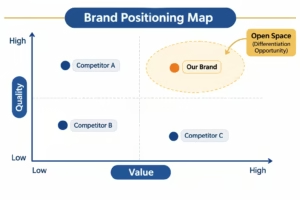
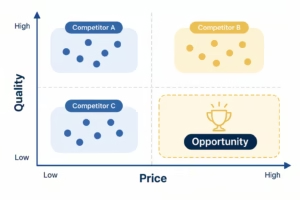
Teams use this evidence to prioritise segments, refine messaging, spot white-space occasions or set criteria for later concept testing.
A hypothetical example: a UK food brand sees flat sales. A U&A study finds occasional users value convenience highly but currently use a different format. The brand can then test packaging or messaging aimed at that occasion instead of assuming the problem is awareness. (This example is hypothetical, not an AMC client project.)
Market research services can design and run U&A studies matched to the decision. Related work often sits under market and consumer understanding. See also our guides on qualitative versus quantitative methods and consumer behaviour research.
Frequently Asked Questions
What is the main difference between usage and attitude research and brand tracking?
Usage and attitude research gives a broad one-off baseline of category behaviour and attitudes. Brand tracking follows specific brand metrics over repeated waves to measure change.
How large should the sample be for a U&A study?
It depends on the population and the subgroups you need to compare. A total sample that looks adequate can still be too small once split. Always document the approach and confidence levels.
Can U&A research replace sales data?
No. It explains patterns and motivations behind sales or usage. Self-reported behaviour can differ from actual transactions. Use both where possible.
When should a UK business commission one?
When category assumptions need testing before major investment in range, positioning or communications, or when existing data no longer reflect current behaviour.
Conclusion
Usage and attitude research gives UK teams a structured view of what people do in a category and what they think about it. Design it around a clear decision, combine qualitative exploration with quantitative measurement, and treat self-reported data with appropriate caution.