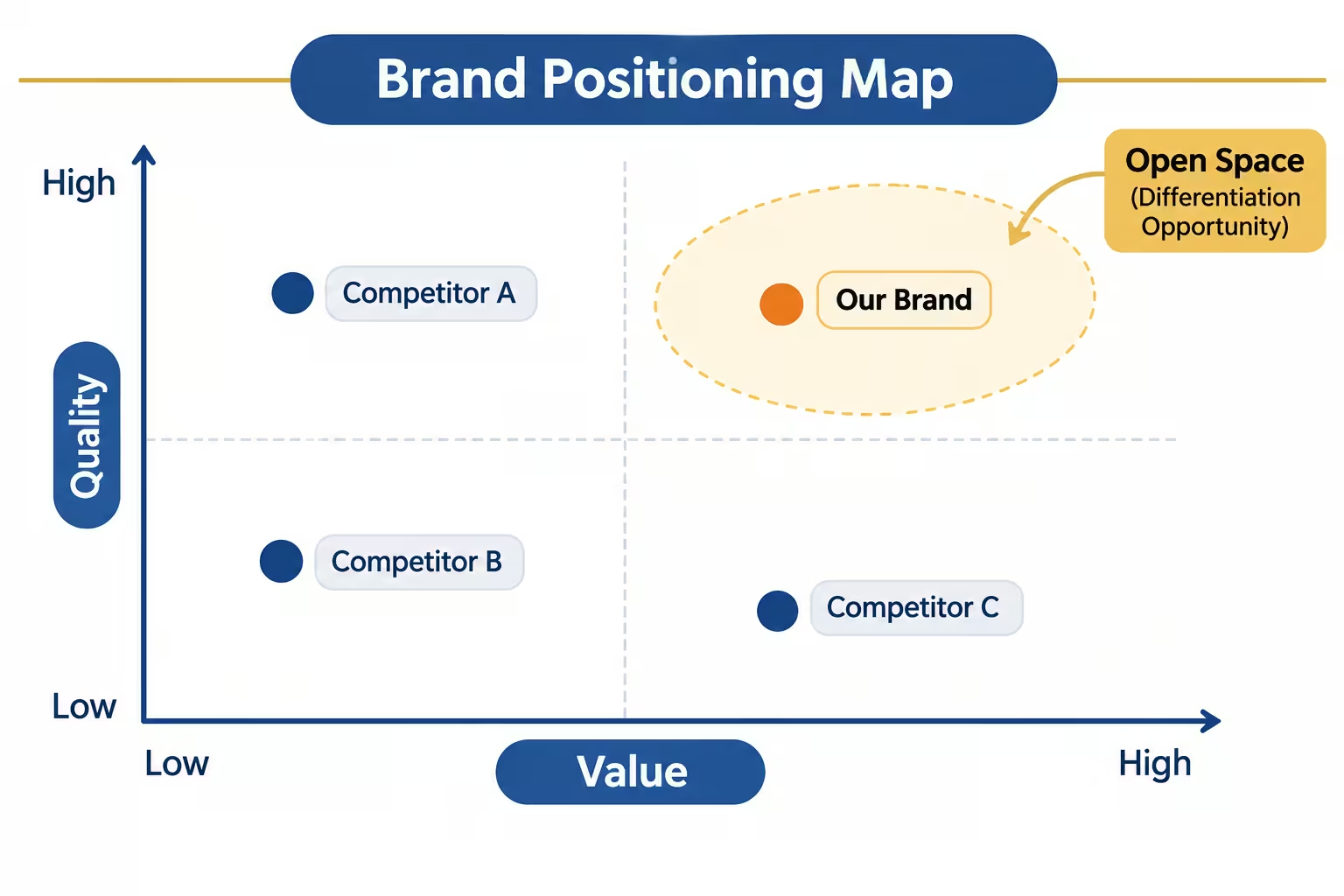
Brand positioning analysis identifies a distinct, credible space a brand can occupy relative to competitors by testing audience needs, current perceptions and proof points. UK marketing and brand teams use it when messaging feels generic, a reposition is planned, or growth requires clearer differentiation. The work reduces the risk of launching a position the market does not value or that rivals already own.
What brand positioning analysis is
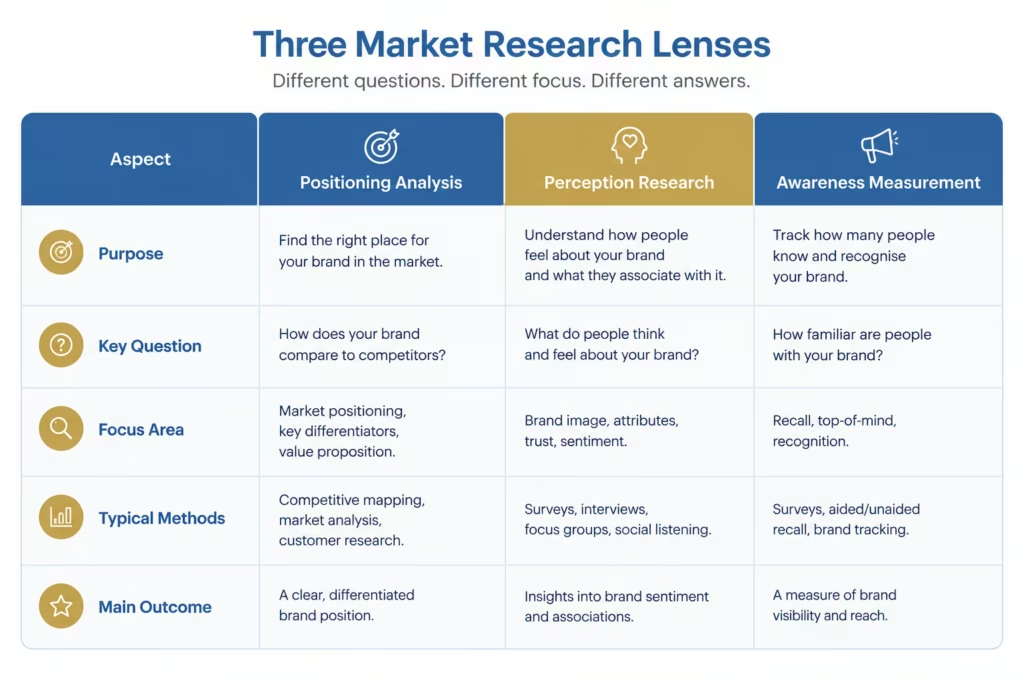
Brand positioning analysis is structured research that examines the competitive frame, the needs that matter to a defined audience, and the attributes or claims a brand can support with evidence. It differs from brand perception research, which measures how people currently see the brand, and from awareness measurement, which tracks recall or recognition. The output is a recommended position plus the evidence and limitations that support it.
Why it matters for UK brands
Many UK organisations operate in categories where functional differences are small. A clear position helps buyers choose and helps internal teams prioritise product, service and communications decisions. Without research, positions are often set by internal preference and later fail to register or differentiate. Analysis also surfaces whether a proposed claim is believable given current experience and competitor activity.
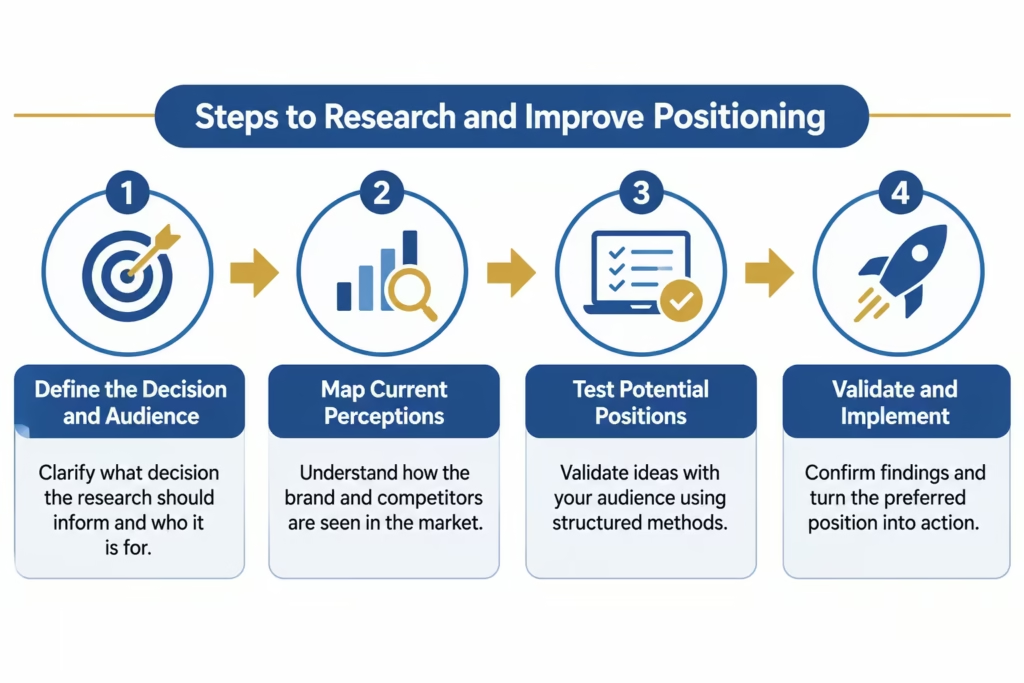
Steps to research and improve positioning
Define the decision and audience
Start with the specific decision the work must inform, for example whether to emphasise reliability over innovation or to target a new segment. Specify the audience by role, sector or need rather than broad demographics. Note any competitor set that must be included. A clear brief prevents research that describes the market without guiding action.
Map current perceptions and the competitive frame
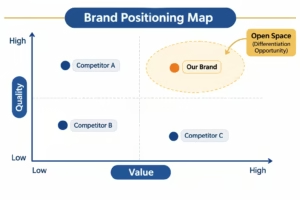
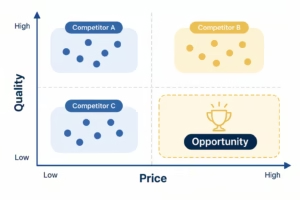
Use secondary sources and primary research to understand how the category is framed and where the brand and competitors sit today. Qualitative interviews or small discussion groups reveal the language people use and the needs that drive choice. Quantitative work can size attribute importance and associations. Perceptual mapping plots brands on dimensions that matter to buyers and highlights open space.
Test potential positions
Develop a short list of candidate positions grounded in real needs and the organisation’s ability to deliver. Test them with the target audience using methods that force trade-offs, such as ranking or choice exercises, rather than simple liking scores. Check whether the audience values the idea and whether the brand can prove it better than alternatives. Label any hypothetical examples as illustrative only.
Validate and implement
Review findings against commercial reality, including operational capacity and existing experience. Document sample size, method, geography and date so later decisions can judge confidence. Translate the preferred position into messaging, product or service priorities and measurement. Plan a follow-up wave to track whether the position registers.
Common methods and their limitations
Qualitative methods surface motivations and language but cannot estimate how widely a view is held. Quantitative surveys provide breadth yet depend on question wording and sample quality. Perceptual mapping visualises relationships but is sensitive to the attributes chosen. Trade-off techniques such as MaxDiff reveal priorities yet require careful design. All methods are subject to UK data-protection rules. The Market Research Society Code of Conduct (2023) requires honesty, objectivity and respect for participants. Findings should be reported with limitations; a single study does not guarantee market outcomes.
How findings inform decisions
Results help teams decide which attributes to emphasise, which claims to drop, and which experience gaps must be closed before a position can be credible. They also indicate whether further research is needed. Organisations can combine this work with brand and communications services or market and consumer understanding support. For UK and Saudi projects, confirm current capability and scope directly.
Practical takeaways
Define the decision first. Match methods to what must be known. State sample, method and limits. Treat the position as a hypothesis that requires evidence of delivery. Review findings with commercial and operational colleagues before full commitment.
Frequently Asked Questions
What is brand positioning analysis?
It is research that identifies a distinct, credible place a brand can occupy relative to competitors by testing audience needs, perceptions and proof points.
How does it differ from brand perception research?
Positioning analysis focuses on choosing and validating a future position. Perception research measures how people currently see the brand.
What methods are typically used?
Common approaches include qualitative interviews, quantitative attribute studies, perceptual mapping and trade-off exercises such as MaxDiff. Choice depends on the decision and resources.
What are the main limitations?
Small qualitative samples cannot be generalised. Survey results depend on design quality. No method guarantees commercial success; findings reduce uncertainty only.
Does AMC Insights offer this work in the UK?
AMC Insights publishes brand and communications and market research services covering UK and Saudi markets. Contact the team to confirm current scope and availability for a specific brief.